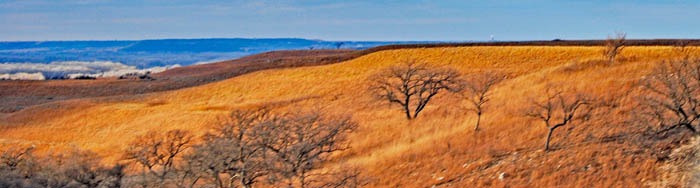
Riley County, Kansas Landscape near Manhattan by Kathy Alexander.
Fort Riley
Keats – Unincorporated
Leonardville
Manhattan – County Seat
Ogden
Randolph
Riley – Unincorporated
Kansas State University
Tuttle Creek Lake and State Park
Big Dam Foolishness at Tuttle Creek Lake
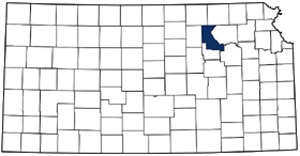
Riley County, Kansas Location.
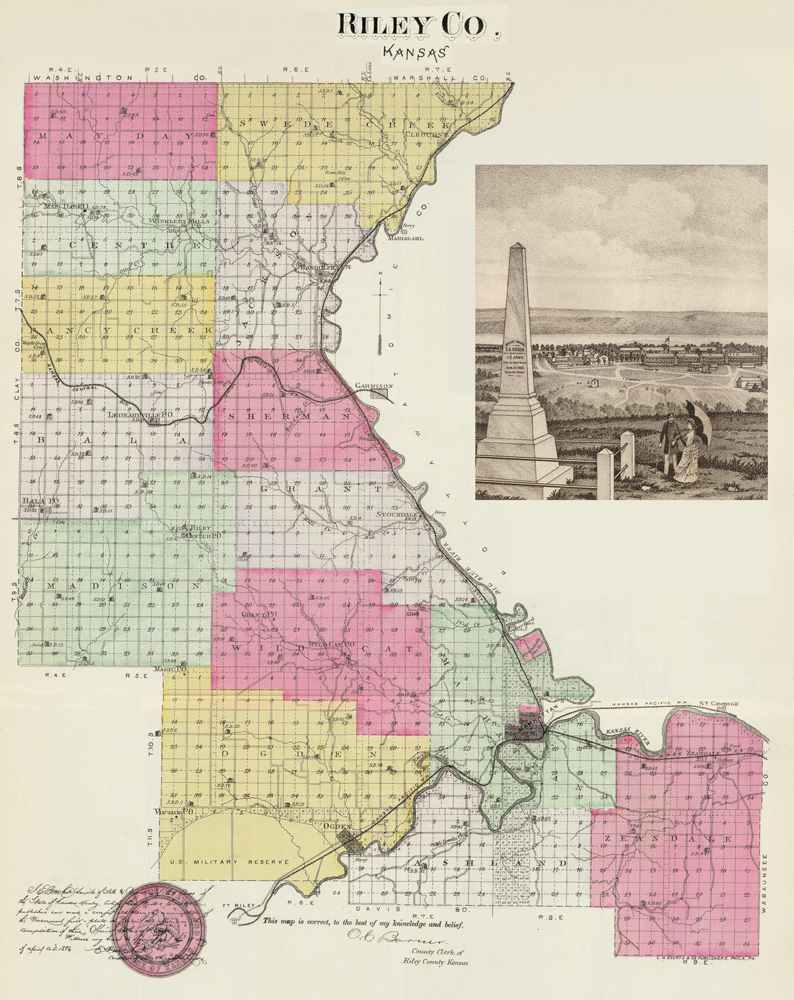
Riley County by L.H. Everts & Co., 1887.
In northeast Kansas, Riley County is one of the original counties organized by the first Territorial Legislature in 1855. The largest city and county seat is Manhattan. As of the 2020 census, the county population was 71,959.
Before the land was opened to white settlers, the area comprising Riley County was part of the Kanza Indian Reservation, though the natives had been moved by 1854.
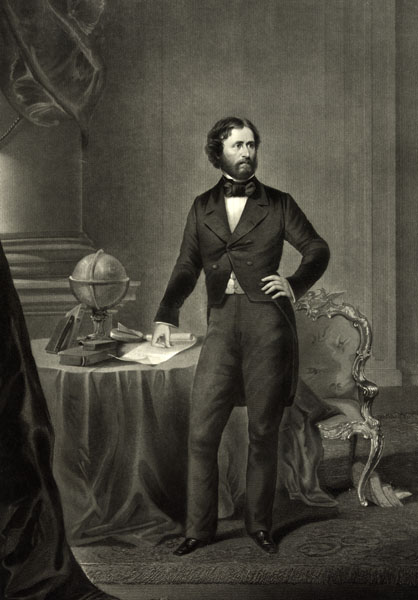
John Charles Fremont by John C. Buttre, 1859.
Several historic roads passed through Riley County. On his second expedition in 1843, Colonel John C. Fremont followed the rivers and streams to the present site of Fort Riley. The Leavenworth and Pike’s Peak Express stage line crossed the county by way of the fort, which was also a station on the Butterfield Overland Despatch route, and the south branch of the California Trail ran by Manhattan.
The first white men in the area were at Fort Riley, established in 1853, at the junction of the Smoky Hill and Republican Rivers to protect travelers along the many trails through the area. The first white man to settle in the county was Samuel Dyer of Tennessee, who operated a government ferry at Juniata or Dyer’s Crossing on the Big Blue River, a few miles above the present city of Manhattan, in the latter part of 1853. This settlement was at the Fort Leavenworth-Fort Riley Road crossing.
In 1854, Reverend Charles E. Blood of New Hampshire came to Juniata and began missionary labor. In the same year, Thomas Reynolds settled in Ogden Township. His house was used as a polling place for the first election held that year. Forty votes were polled for a delegate to Congress, the majority of them for the Free-State candidate.
The county derived its name from Fort Riley, and the territory’s first capital was at Pawnee, just east of the military reservation, two miles from the fort, where the old building used as the first capital still stands. Dr. William A. Hammond, Captain Nathaniel Lyon, Robert Klotz, Robert Wilson, and several others had settled there before the legislature met on July 2, 1855. When the capital site was declared illegally situated on Indian reservation land, it closed in August 1855.
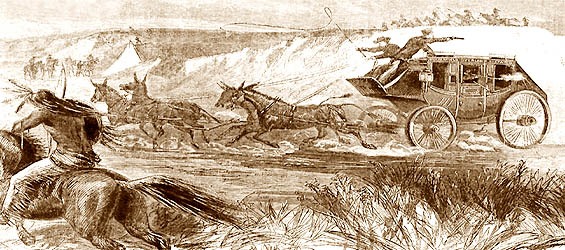
Butterfield Overland Despatch by Harpers Weekly, 1866.
Several other towns also quickly developed, including Ogden, which got most of its initial settlers from the defunct town of Pawnee. The Ogden settlement was primarily comprised of pro-slavery advocates, as was the original town of Randolph, initially settled by Gardner Randolph, who came to Kansas from Tennessee to build a plantation home near the mouth of Fancy Creek. All the other towns settled in Riley County during the territorial years were settled primarily by Free-State advocates.
Manhattan was also founded early on by four separate town-founding groups.
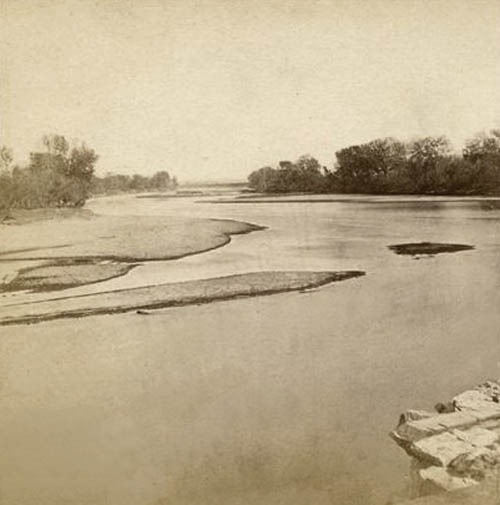
Kansas River in Riley County near Manhattan, Kansas, by Alexander Gardner, 1867.
In the fall of 1854, George Park founded the town of Poleska along the Kansas River, and the same year, Samuel Dexter Houston and four other men founded the town of Canton at the foot of Bluemont Hill. Isaac Goodnow and the New England Emigrant Aid Company settled at the junction of the Blue and Kansas Rivers in the spring of 1855. These people were soon joined by the Cincinnati and Kansas Land Company in June 1855, and the four groups combined their resources to create Manhattan.
The Territorial Legislature elected officers to organize the county, and the temporary county seat was designated at Ogden, where a provisional courthouse was rented. In the election to choose a permanent county seat, the contesting towns were Ogden and Manhattan, the former receiving a majority of votes.
Later, fraud was proven, and Manhattan became the county seat. The next legislature passed an act making Manhattan the permanent county seat and requiring the county officers to move the county records.
Shortly after the organization of Manhattan, a college was founded, and the Bluemont Central College Association obtained a charter from the Territorial Legislature. The school opened in 1860 under the supervision of the Methodist Church. In 1863, it became the Kansas State Agricultural College, and today it is the Kansas State University.
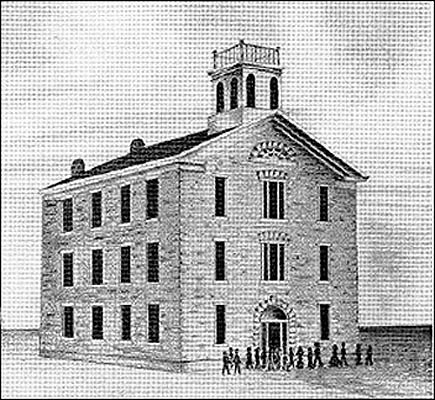
Bluemont College in Manhattan, Kansas.
Some of the first post offices in the county were established in Ashland in 1853; one in Zeandale Township in 1857; Stanton in May; Day Township in 1869; Ogden; and Riley Center. The first schools in the county were in Manhattan and Ashland Township in 1857. The following year, a school was opened in Zeandale Township, with Grant and Ogden Townships following in 1859.
The development of the Kansas Pacific Railroad through Manhattan and Ogden in 1866 spurred significant growth in the two towns, and several other lines were added to the county over the years. As Riley County continued to attract more settlers, more towns were developed, many of which no longer exist today.
In 1870, a colony of Welsh settlers organized the town of Powys, located about two miles east of present-day Bala. When they could not find enough water, they relocated two miles west and formed the town of Bala in 1871. The Bala school closed in 1964, and the post office suspended delivery in 1966, leaving the old settlement a ghost town.
Other towns were settled on the trade routes, including May Day in 1871 and Bodaville in 1885; neither exists today. Other old settlements included Peach Grove, Swede Creek, Center Hill, Parallel, Tabor Valley, Deep Creek, Rose Hill, Alert, Grandview, and Mariadahl.
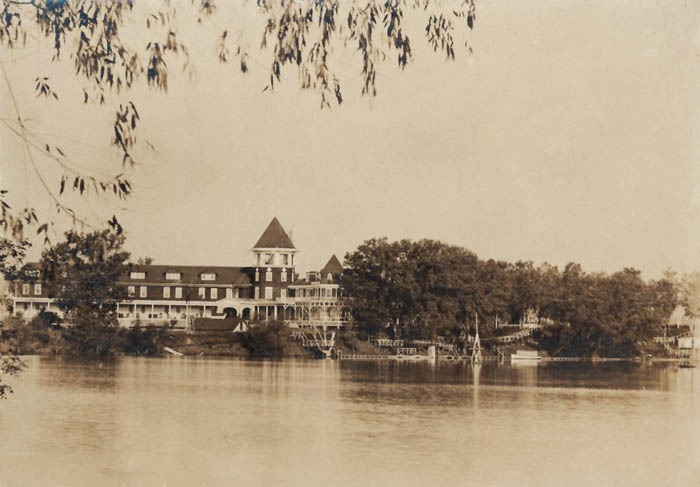
Eureka Lake Resort, Manhattan, Kansas 1903.
Two resort communities, including Blasing Springs, were also established in 1882. These communities provided mineral water for medicinal drinking and bathing. In 1943, a tornado destroyed the three-story hotel that once stood there. Another was Manhattan Beach, also called the Eureka Lake Resort, built by C.P. Dewey in 1899 on an elbow lake of the Kansas River. The 1903 flood destroyed the lake, and the resort was later sold.
At the turn of the century, Riley County boasted almost 14,000 residents and continued to grow and diversify over the years.
Riley County is home to two of Kansas’s largest employers: Fort Riley and Kansas State University. The county also has several museums and historic sites that tell of its long history.
Contact Information:
Riley County Kansas
110 Courthouse Plaza
Manhattan, Kansas 66502
785-565-6200
©Kathy Alexander/Legends of Kansas, updated May 2026.
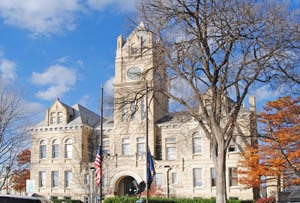
Riley County Courthouse in Manhattan, Kansas, by Kathy Alexander.
Also See:
Sources:
Blackmar, Frank W.; Kansas: A Cyclopedia of State History, Vol I; Standard Publishing Company, Chicago, IL 1912.
Cutler, William G; History of Kansas; A. T. Andreas, Chicago, IL, 1883
Wikipedia