Kansas Indians
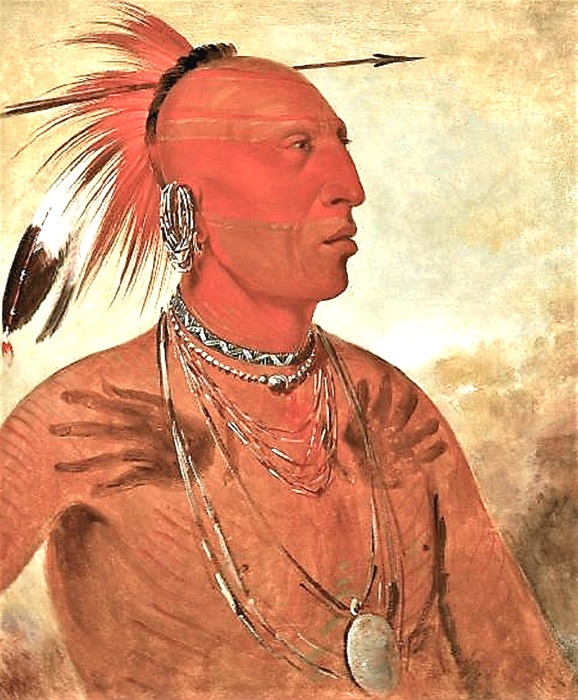
Pawnee Indian by George Catlin.
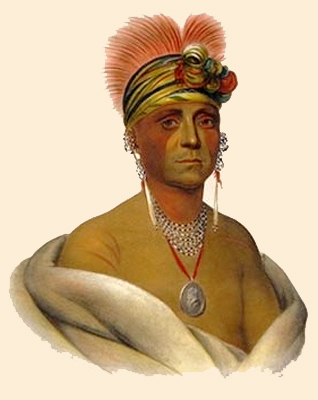
Kanza/Kaw Chief
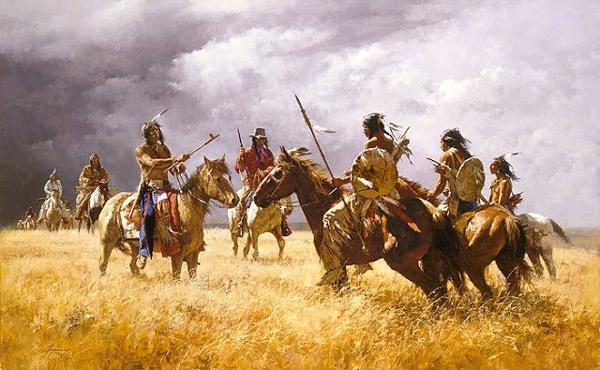
Plains Indians
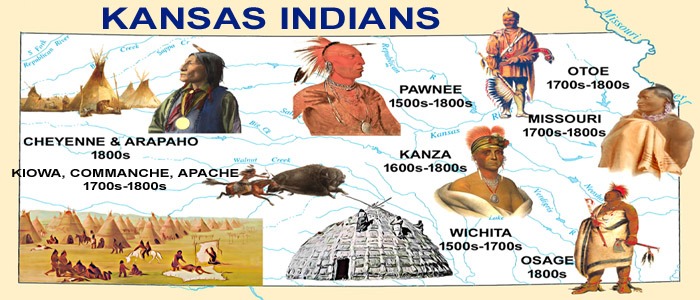
Long before Kansas ever became a state, several Native American tribes called the region home, including:
Arapaho
Comanche
Kanza
Kiowa
Osage
Pawnee
Wichita
In addition to these first inhabitants, the Cheyenne Indians, close allies of the Arapaho, were a far-ranging people who covered vast areas of the Great Plains, primarily what would become South Dakota, Wyoming, Nebraska,and Colorado, and sometimes extended into northwestern Kansas.
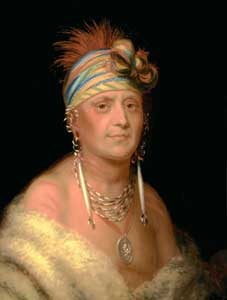
Kanza Chief White Plume by Charles Bird King, about 1822.
The Wichita Indians, who originally lived in southern Oklahoma and northern Texas, also began to expand into southern Kansas as more people invaded their original territory.
However, beginning in the 1820s, the area that would become Kansas was permanently set aside as Indian Territory by the U.S. government and closed to white settlement. The government then began resettling the Native American tribes already present in eastern Kansas to make room for the relocation of eastern tribes into the area. In June 1825, the Kanza Nation, from whom the state took its name, ceded 20 million acres of their territory and was afterward limited to a northeast Kansas reservation. The Osage Nation was also limited to a reservation in southeast Kansas in the same month.
In 1830, the Indian Removal Act authorized the government to designate specific Western lands for settlement by Indians removed from their native lands, and the Indian Intercourse Act of 1834 specifically set aside Kansas, Nebraska, and Oklahoma as the Indian Territory, thereby facilitating the westward relocation of numerous tribes. Some eastern and midwestern tribes signed treaties agreeing to relocate to reservations in Nebraska, Oklahoma, and Kansas in exchange for exclusive ownership of the new lands. However, other tribes refused or resisted and were forcibly moved by the U.S. Army.
The tribes relocated to Kansas included:
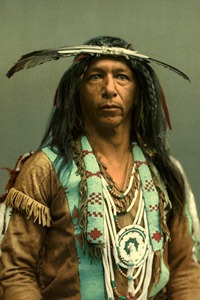
Arrowmaker an Ojibwa/Chippewa brave by the Detroit Photographic Company, 1903.
Cherokee
Chippewa/Ojibway
Confederated Tribes of the Kaskaskia, Peoria, Wea, and Piankashaw
Delaware
Ioway
Otoe
Kickapoo
Miami
Ottawa
Potawatomi
Sac and Fox
Seneca
Shawnee
Wyandot
However, because of the fertile land in Kansas and Nebraska, both states were redesignated as territories in 1854, and the region opened to white settlement. At that point, the vast majority of Kansas Indians, including many of the tribes originally native to the area, were forced to go through a second removal to Oklahoma in the late 19th century, where many still live today.
However, four tribes were left in Kansas, which have reservations that are federally recognized, including:
-
The Kickapoo Tribe of Kansas in Horton, Kansas
-
Ioway Tribe of Kansas and Nebraska in White Cloud, Kansas
-
Prairie Band Potawatomi Nation in Mayetta, Kansas
-
Sac and Fox Nation in Brown County, Kansas.
©Kathy Alexander/Legends of Kansas, updated January 2026.
Also See:
Native Americans – First Owners of America
See Sources.