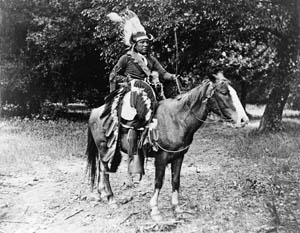
Kiowa Warrior by H.P. Robinson.
Nestled in a valley East of the Gypsum Hills is the historic town of Medicine Lodge, Kansas, the county seat of Barber County. Medicine Lodge took its name from the Medicine River, which skirted the townsite on the West. The Kiowa Indians named this stream after discovering its healing qualities and often met on its banks in council for “making medicine.” For years before the settlers arrived, Native Americans in the area believed the spot was under the Great Spirit’s protection.
Prairie fires, which periodically destroyed tree growth along the western rivers, swept through the region, making it seem that the waters of the Medicine River possessed a magic power to protect the green woodland clinging to its margin. Representatives of many tribes in the Southwest met in peace at a little medicine lodge that is said to have stood on the riverbank near what would later become the townsite of Medicine Lodge. There, they fasted, prayed, and bathed in the curative waters of the sacred river so their bodily ills might be healed.
When constant Indian wars brought the settlement of Kansas Territory almost to a standstill in the 1860s, representatives of the Federal Government made plans for a great peace council between the Indians and the white men. Scouts, soldiers, settlers, and gold-seekers were enlisted to inform tribes that Government representatives desired to meet them and negotiate a peace treaty at a place of their choosing.
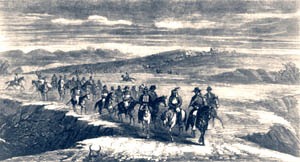
Headed to Medicine Lodge Peace Council by Frank Leslie Newspaper, 1867.
After months of tribal councils and pow-wows, the tribes chose the site of their medicine lodge on the wooded river banks. Two factors influenced their choice. They believed that the Great Spirit would watch over all that took place near their ancient sanctuary. The spot was also miles from white civilization, and here, in their own country, they believed there was less danger of treachery from white men. They completed plans for the meeting in early fall 1867. In October, up to 15,000 Indians met with 600 Government representatives in what is said to be the largest gathering of Indians and whites in U.S. history.
The commissioners, whose duty was to negotiate the treaty with the chiefs of the five Plains tribes—Kiowa, Comanche, Arapaho, Apache, and Cheyenne —were all men of prominence in war and Government affairs. Representing the Federal Government were N. G. Taylor, orator and scholar; General William T. Sherman, Civil War hero; and S. J. Crawford, Governor of Kansas. Others who played essential parts were Colonel A. G. Boone, grandson of Daniel Boone; Colonel Edward W. Wynkoop, agent of the Arapaho and the Cheyenne, respected by the whites and possessing the trust and confidence of the Indians; Colonel James H. Leavenworth, an agent of the Kiowa and the Comanche; Kit Carson, William Mathewson, and Buffalo Bill Cody, Indian fighters and scouts; and Jesse Chisholm, for whom the Chisholm Cattle Trail was named. Henry M. Stanley, later known for his explorations in Africa and his search for David Livingstone, covered the event for the New York Tribune.
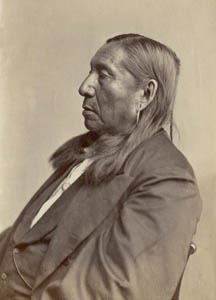
Arapaho Chief Little Raven.
Towering above all the Indians was Little Raven, orator and chief of the Arapaho. A.A. Taylor, later Governor of Tennessee, attended the council as a secretary. In an account of the event published in the early 1900s, he said:
“Little Raven’s speech before the commission on the question of damages… his reference to the ill-treatment the Indians had received from the whites was scathing, and his plea for protection and better treatment in the future was the most touching piece of impassioned oratory to which I have listened before or since.”
Of no less importance to the gathering were Satanta, chief of the Kiowa; Young Bear, Iron Mountain, Painted Lips of the Comanche; Wolf Sleeve, Iron Shirt, and Crow of the Apache; and Black Kettle, Bull Bear, and Slim Face of the Cheyenne.
They held council meetings in a large tent near the riverbank. Commissioners and Indian chiefs sat on camp stools in a circle, and secretaries wrote on large packing boxes. Thus, after three years of constant warfare, Indians and whites met peaceably, exchanging words instead of blows and concluding arguments with mutual concessions. Each chief spoke before the council, and the grievances and claims of each tribe were settled individually. At the end of the two-week negotiations, they signed the treaty. It fixed the southern boundary of Kansas and stipulated that South of that line should be Indian Territory “as long as grass grows and waters run.”
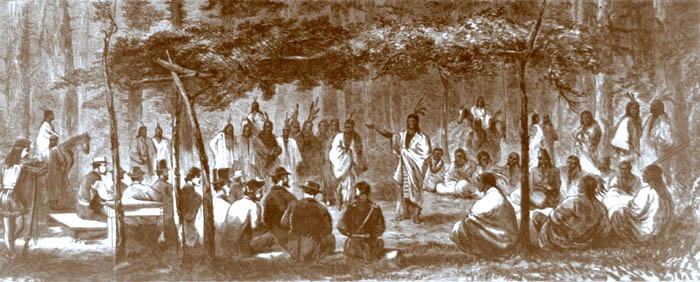
Medicine Lodge Peace Council by John Howland, 1867.
The meetings ended a war that had lasted three years, clearing the way for white settlement of the entire Southwest. As a result of the treaty, the populations of Colorado, North Dakota, South Dakota, New Mexico, and Arizona increased, indirectly contributing to those states’ admission to the Union. White men settled in the region shortly after signing the treaty, but there were few.
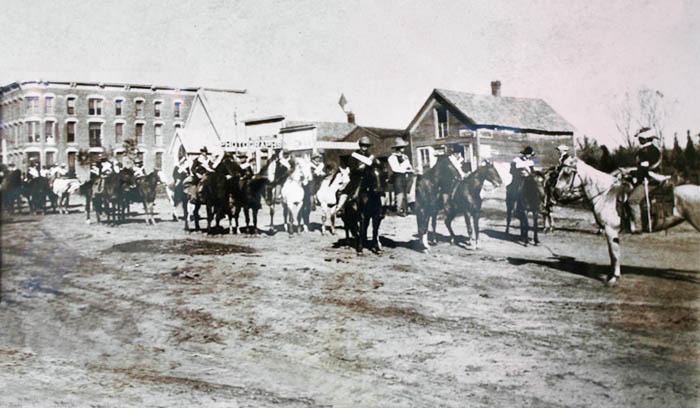
Early day Medicine Lodge, Kansas.
In October 1872, William Walters had a temporary camp at the forks below what would become the townsite of Medicine Lodge. Still, he made no effort at settlement and moved away the following spring. In February 1873, a party led by John Hutchinson came to the area and laid out a 400-acre townsite. The location was perfect, with Elm Creek to the East and Medicine Lodge River to the West, joining their waters a quarter of a mile South of the city. Between the waterways, the townsite sat upon a lofty plateau.
The first building on the townsite was the structure that would later form the Medicine Lodge House dining room. D. Updegraff built it as a hotel with lumber hauled from Hutchinson. Next, Bemis, Hutchinson & Co. built an office, which would later become the South wing of the Medicine Lodge House. Bemis, Jordon & Co. then built a large general store on the site that Payne’s Bank would later occupy. L.H. Ulmer was the next merchant to locate on the townsite, followed in the summer of 1873 by D. E. Sheldon. Immigration was rapid that year, with the arrival of C.T. Rigg, the first physician and later the county sheriff; W. E. Hutchinson, the first attorney; Cicero Widner, who put up the first blacksmith shop; and S.A. Winston, who established the first drug store. S. Winston established a post office. Mail routes from this point ran to Harper, Kiowa, Kinsley, Great Bend, and Hutchinson. They also built the first schoolhouse that year for $400. Miss Lucinda Burlingame was engaged as the first teacher.
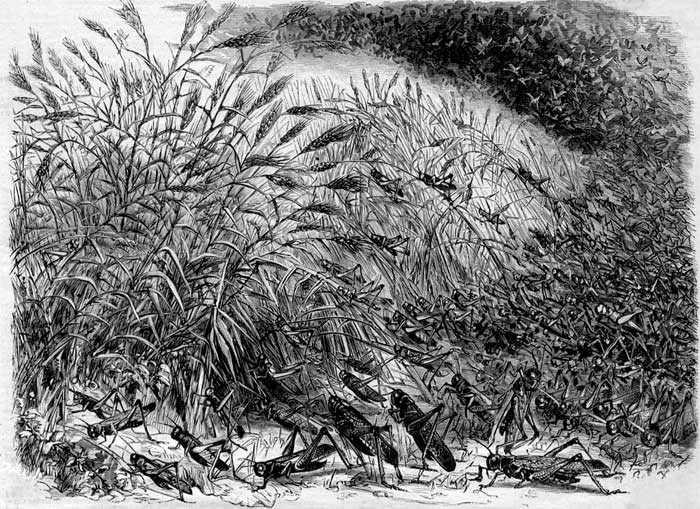
Grasshoppers, 1874.
1874 was not a good year for the fledgling settlement. It was known as the “grasshopper year,” when swarms of insects destroyed the corn and vegetables that would have sustained the new settlers the following Winter. That year, the area also experienced a period of Indian outbreaks in western and southern Kansas. Thomas A. Osborne, then governor of Kansas, organized the Kansas State Guards. Sun City and Medicine Lodge furnished the two companies for this section of the state, guarding the area from Caldwell to Dodge City and South to the Cimarron River. At the time, the militia and local citizens built a stockade in the area that now forms the center of Medicine Lodge’s business district.
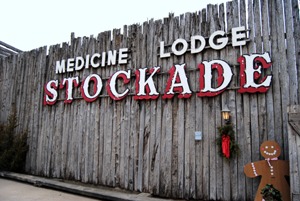
Medicine Lodge Stockade Museum by Kathy Alexander.
Several times, as many as 200 people would gather in the stockade with the wagon teams and animals. The stockade walls were cedar posts about nine feet high. While sheltered inside, they issued rations daily, and every man was assigned a place to stand guard. Many younger men with no families were kept busy scouting the area. During this time, the militia had but one encounter with the Indians northwest of Sharon, at the foot of the big hills. During the battle that followed, six of the estimated 50 Indians were killed, and the militia captured 54 ponies, six mules, and the Indians’ ammunition. On June 17, 1874, three men couldn’t make it to the stockade, two of them being killed 2.5 miles Southwest of Medicine Lodge and another on Cedar Creek 3.5 miles West of town by Osage Indian raiders. The Indian scare and swarms of grasshoppers that year choked settlement and caused a significant exodus, but the following years showed steady growth.
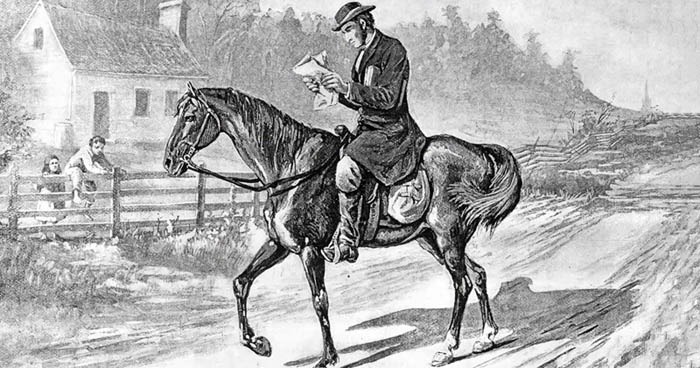
Traveling Preacher.
Traveling Methodist preachers held the earliest religious services. The community completed a church in 1879 for $1,200. The Christian Church organized in October 1878, and the community completed a church building in 1880. A Presbyterian Church was formed as early as 1879, and services were held in the schoolhouse and later in the Methodist Episcopal Church. In 1883, the congregation built its building.
The first newspaper, The Barber County Mail, was established on May 20, 1878, by M. J. Cochran, but it would only last until January of the following year. It was sold a couple of months later, in March. W. McNeal and E. W. Iliff, who started the Cresset, first published it on March 20, 1879. The newspaper continued through August 1917. A second newspaper, The Barbour County Index, appeared on June 10, 1880. It continued for over a century, ending in 2001.
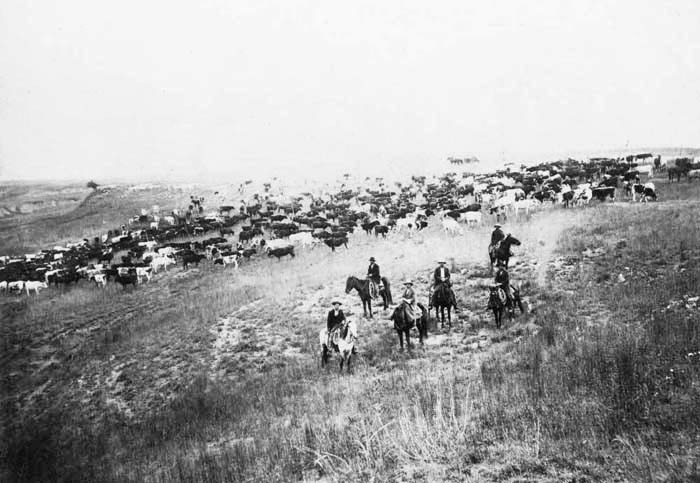
Medicine Lodge Cowboys.
The Merchants’ & Drovers’ Bank was the city’s first bank, established in October 1880 by H. M. Hickman. The business was transacted until January 10, 1882, when an unfortunate outside business caused the bank to close. Two days after the Merchants’ & Drovers’ closing, the Medicine Valley Bank was opened. A fine bank building was completed in March 1883 at a cost, all told, of $7,500. Meanwhile, a private bank called Standiford, Youmans & Co., was organized in 1881.
In 1882, the town began to build a new brick school, which was completed the following year. By that time, the city was home to about 600 people. In 1884, Medicine Lodge was a straggling country town without a railroad, and the cattle business was its chief source of income. The community boasted only one outstanding institution: the Medicine Valley Bank, whose president was E. Wylie Payne and whose cashier was George Geppert. On May 1, 1884, four men rode into town and attempted to hold up the bank. They killed Geppert, mortally wounded Payne, and fled South with a posse of townsmen hastily organized by Barney O’Connor, a prominent cattleman, in pursuit.
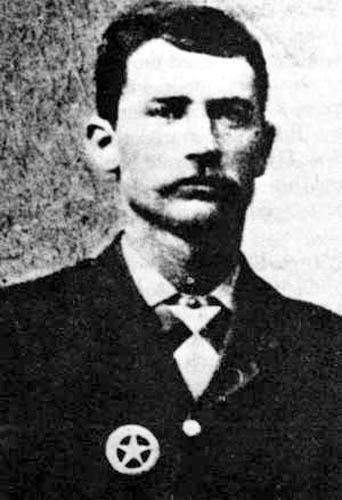
Henry Newton Brown.
Aided by a group of cowboys, the posse surrounded the bandits in a narrow canyon in the Gypsum Hills Southwest of town. Trails leading out of the canyon were barred by riflemen, who covered an unarmed posse member sent into the canyon to demand their surrender. Realizing they were trapped, the four men walked out with upraised hands and were placed in a small frame house that served as a jail. Payne died shortly after nightfall. When word of his death passed through the crowd, the rumbling of voices in the streets was punctuated with cries of “Lynch them! Lynch them!”
The gang leader, killed in an attempt to escape from the jail, was none other than Henry Newton Brown, who was serving as city marshal of Caldwell, Kansas, at the time. A “reformed” bad man and former companion of Billy the Kid, Brown had a record of excellent work in Caldwell, and town residents had presented him with a gold-mounted Winchester rifle. With Brown were Ben Wheeler, assistant marshal of Caldwell, William “Billy Smith,” and John Wesley, cowboys from Texas. Wheeler, Wesley, and Smith came to their death, according to the report of the coroner’s jury, “by hanging at the hands of a mob, composed of persons unknown.”
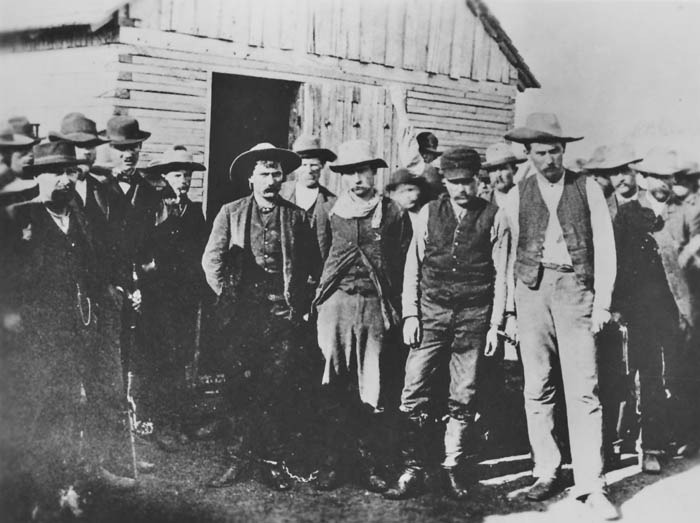
Medicine Lodge, Kansas Bank Robbers.
A year later, Medicine Lodge finally received a railroad when the Atchison, Topeka & Santa Fe Railroad made it the terminus of the tracks from nearby Kiowa, Kansas.
Carry A. Nation, militant reformer and prohibitionist, moved to Medicine Lodge in 1889, and she and her husband, David Nation, rented a tiny stone house just West of Main Street. However, it was not until the last year of the century that she began her crusade against liquor, which later took her across the United States and into England. Her first protest began in 1899, when she strode into a Medicine Lodge saloon owned by Mort Strong. One by one, she shut down several saloons in the community, and by March 1900, no saloons remained in Medicine Lodge. Carry then took her saloon protests on the road, smashing barrooms at Kiowa and Wichita, where she purchased and used her first hatchet in Enterprise, Kansas, and later at Topeka’s Senate Saloon. Almost every town in Kansas experienced Carry’s barroom destruction personally or by her followers.
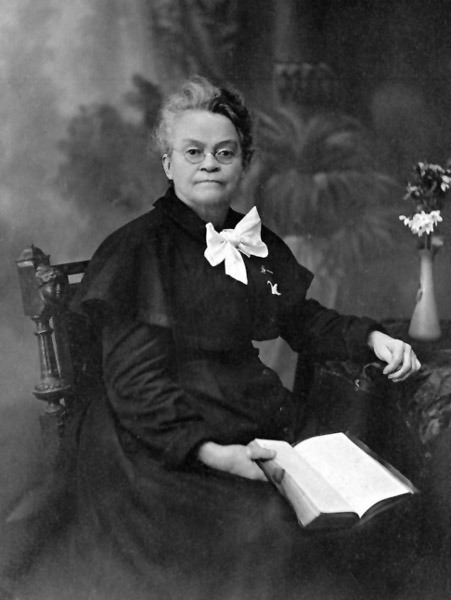
Carry Nation.
In the 1890s, dissension ran high in Medicine Lodge and in the surrounding country between cattlemen who wanted an open range and settlers who wanted to make homes, build fences, and till the soil. By 1900, however, the feud had subsided, and soon cattlemen owned great ranches to the South and West of town, while farmers raised chickens and hogs, planted gardens, and tilled the soil in the fertile valley along the river.
By the early 1900s, Medicine Lodge had become the Atchison, Topeka & Santa Fe Railroad terminus extending from Kiowa in the southeastern part of the county. By 1910, it was home to about 1,200 people and boasted five churches, two banks, and two newspapers. A daily hack ran to Eagle and Lasswell.
Medicine Lodge continued to grow over the next several decades, even during the Great Depression and Dust Bowl years, becoming a shipping point for the vast wheat and cattle country to the South and West. In addition to agriculture, the town’s economy was boosted by a gypsum mill that mined gypsum rock in the hills West of the city. The gypsum was made into cement, and a fine grade of plaster was used for making molds and wall decorations. The mill furnished much of the plaster used in Federal buildings in Washington, D.C.
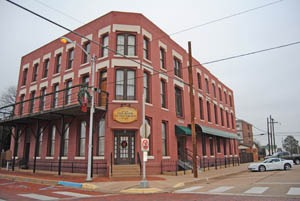
Grand Hotel in Medicine Lodge, Kansas, by Kathy Alexander.
The city’s population peaked in 1960 at 3,072. Since then, however, like other agricultural communities across the Sunflower State, its population has fallen. Today, it is home to about 2,000 people.
Medicine Lodge features several sites and events that celebrate its rich history. The Stockade Museum, located at 209 W Fowler (U.S. Hwy 160), is a replica of a timber fortress that features photographs and artifacts of the town and the area’s history. The site also includes a 1877 Log Cabin, the Gypsum House, and an Old Jail inside the Stockade walls. The Carry Nation Home is located right next door. A Peace Treaty Statue of a frontiersman and Indian clasping hands and the Wisner Fountain, initially used to water horses, are located on North Main Street.
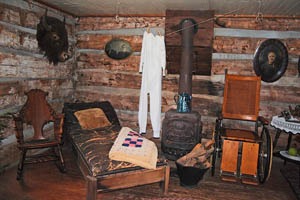
Medicine Lodge Museum by Kathy Alexander.
Near the confluence of the Medicine Lodge River and Elm Creek, the Medicine Lodge Peace Treaty Site commemorates the signing of the Medicine Lodge Treaty in October 1867 by the United States government with major Western Native American tribes of the region. Three treaties were signed, collectively grouped under one name. The site also includes the camp area on the North and South sides of the Medicine Lodge River, where most Native Americans camped. It was designated a U.S. National Historic Landmark in 1969 and listed on the National Register of Historic Places. The site is located East of town in Memorial Peace Park.
While in the area, take a beautiful drive along the Gypsum Hills Scenic Byway, which begins at the western city limits of Medicine Lodge and continues 42 miles to the junction of U.S. 160 and U.S. 183 at Coldwater. The journey bisects the beautiful Gypsum Hills, where travelers can see flat mesas, deep canyons, high hills, red soils, and caprock formations.
Medicine Lodge is located in south-central Kansas on U.S. highways 160 and 281.
More Information:
Medicine Lodge Chamber of Commerce
215 S Iliff
Medicine Lodge, Kansas 67104
620-886-3417
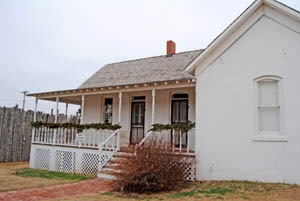
Carry Nation Home in Medicine Lodge, Kansas, by Kathy Alexander.
©Kathy Alexander/Legends of Kansas, updated September 2026.
Also See:
Carry Nation – Temperance Reformer in Kansas
Medicine Lodge Peace Treaty Site
See Sources.