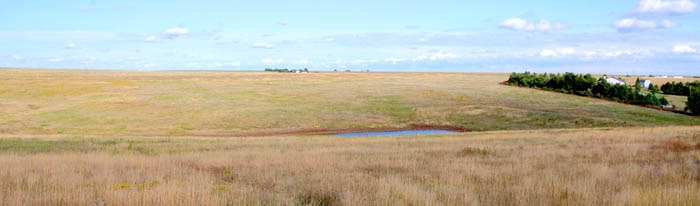
Ford County, Kansas, west of Dodge City by Kathy Alexander.
Towns & Places:
Bloom – Unincorporated Ghost Town
Dodge City – County Seat
Fort Dodge – Unincorporated
Kingsdown – Unincorporated Ghost Town
Spearville – Unincorporated
Willrose Gardens – Unincorporated
Wright – Unincorporated
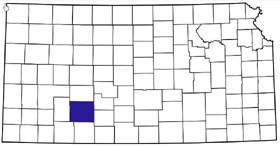
Ford County, Kansas Location
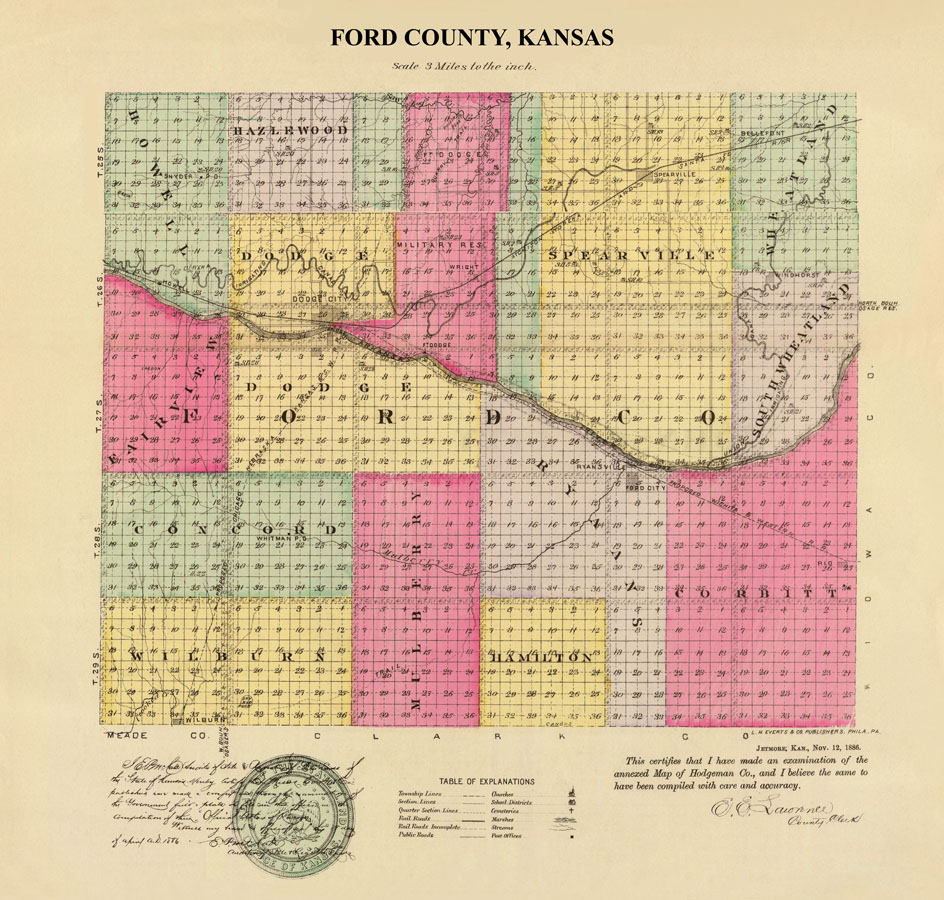
Ford County Map by L.H. Everts & Co., 1887.
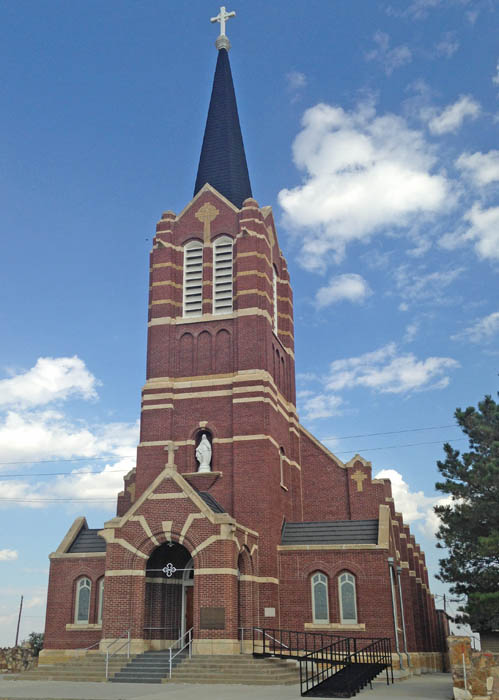
Immaculate Heart of Mary Catholic Church in the old town of Windhorst, Kansas, courtesy Wikipedia.

Fort Dodge, Kansas, 1867.
Ford County, Kansas, located in the southwestern part of the state, was created by a 1867 Legislative Act that divided the state’s unorganized territory into counties. It was named in honor of Colonel James H. Ford of the Second Colorado Cavalry, who was in charge of the construction of Fort Dodge after the Civil War. However, pioneers had frequently traveled through the region along the Santa Fe Trail.
One of the first parties to travel westward through this portion of Kansas with a pack train was the McKnight Expedition in 1812, which followed the Arkansas River. A few years later, Major Stephen H. Long’s Expedition passed up the Arkansas Valley, and by 1825, this route became known as the Santa Fe Trail. One of the earliest military posts in Kansas, Fort Atkinson, was located in Ford County. Fort Dodge, established in 1864, was on the north bank of the Arkansas River, about five miles southeast of Dodge City. The old military reservation is now the State Soldiers’ Home site.
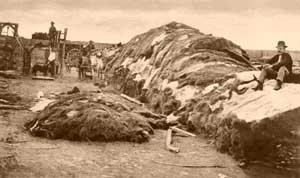
Buffalo hide yard in Dodge City, Kansas.
During the California Gold Rush in 1849, thousands of gold seekers passed through the area along the Santa Fe Trail, but few settled there. One of the first permanent settlers was Andrew J. Anthony, who settled on a ranch about 20 miles west of present-day Dodge City in 1867. He kept a few cattle and a general store for a year, then moved to Fort Dodge and engaged in the sutler business until 1874. Herman J. Fringer came to Fort Dodge in 1867 as a quartermaster’s clerk. Later, he opened one of the pioneer drugstores and served as a Justice of the Peace before the county was organized. H.L. Sitler arrived in the county in 1868 and was among the pioneer freighters before the railroad was built.
In August 1872, buffalo hunters and businessmen from various industries were drawn to Ford County. Dodge City was established upon completion of the Atchison, Topeka & Santa Fe Railroad the following month. Before the buffalo were wiped out, their hides were extensively shipped from Dodge City. Later, Dodge City would develop into a rough-and-tumble cowtown.
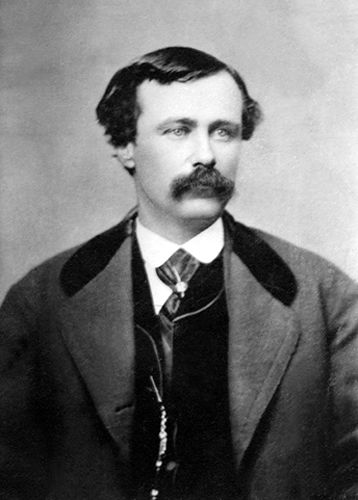
Charles Rath.
As the frontier moved further west, Ford County became populated with industrious farmers and ranchers who established permanent homes. On April 5, 1873, Governor Thomas A. Osborn proclaimed the organization of Ford County. He appointed Charles Rath, J.G. McDonald, and Daniel Wolf as special commissioners and Herman J. Fringer as a special clerk. The commissioners soon met at Dodge City and elected Charles Rath as chairman. Following the election of commissioners and officers, an election for county officers was ordered for June 5, 1873.
By 1874, Dodge City had become the primary shipping point for the Texas cattle trade; cowboys from the Plains were driving large quantities for shipment. These many cowboys, railroad workers, gamblers, gunfighters, and “ladies of the night” soon earned Dodge City a reputation as a wicked little town.
One of the earliest newspapers in the county was the Dodge City Messenger, established in February 1874. However, the paper was suspended in 1875.
Until 1875, rented buildings were used for courthouse purposes and county offices. However, during the summer of 1876, a fine brick courthouse was completed at a cost of $8,000, and all the county offices and records were relocated to it.
The Dodge City Times first appeared on May 20, 1876, and, over the decades, Ford County featured several other newspapers. The Ford County Globe was established in Dodge City in December 1877 and is still in existence today.
In 1880, the Atchison, Topeka, and Santa Fe Railroad reached Santa Fe, New Mexico, marking the decline of the Santa Fe Trail and the many travelers passing through Dodge City.
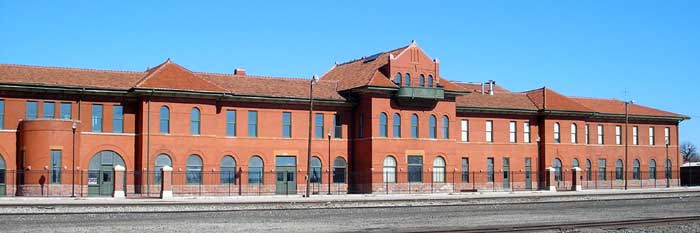
Santa Fe Railroad Depot in Dodge City, Kansas, by Kathy Alexander.
With the Indians effectively “lodged” on reservations, there was no longer a need for a military presence, and Fort Dodge was closed in 1882. By 1886, the cattle drives had ended, and the county settled into a more peaceful existence.
By the turn of the century, Ford County had almost 5,500 residents and would see tremendous growth over the next decade, as its population doubled to more than 11,000. By this time, Dodge City had become a transportation hub in the area, with some 90 miles of railroad tracks within the county. In addition to its mainstay of farming and ranching, the county also contained good sandstone, limestone, and gypsum, which were quarried and sold. The area’s industry and services also expanded to include several flour mills, machine shops, ice plants, and more.
During the 1930s, Ford County, like many others in Kansas, was affected by the Dust Bowl, especially on “Black Sunday,” when a massive front moved across the Great Plains on April 14, 1935. Although many hardy residents stayed, living on hope and following the advice of the U.S. Soil Conservation Service, many others left, reducing the county’s population.
However, Ford County recovered and diversified its interests and businesses over the next 50 years. Today, the county supports a population of approximately 34,000. Its rich history is preserved in its landmarks and museums, including the Boot Hill Museum in Dodge City.
Contact Information:
Ford County Kansas
100 Gunsmoke Street
Dodge City, Kansas 67801
620-227-4670
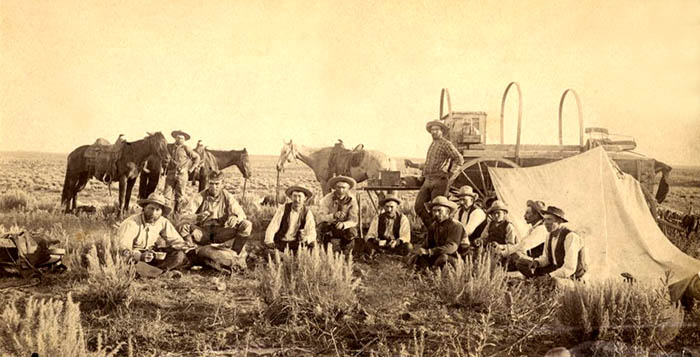
Ford County Cowboys at Chuckwagon, 1884.
©Kathy Alexander/Legends of Kansas, updated December 2025.
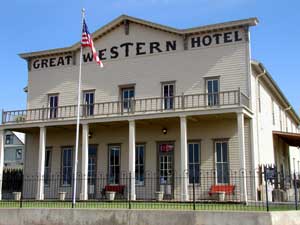
Great Western Hotel in Dodge City, Kansas, by Kathy Alexander.
Also See:
Santa Fe Trail – Highway to the Southwest
See Sources.