
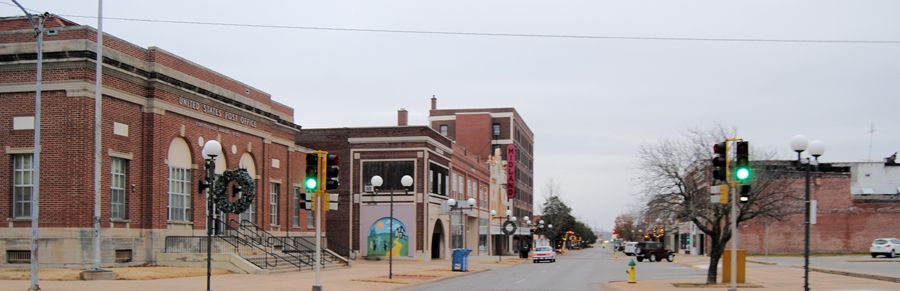
Coffeyville, Kansas by Kathy Alexander.
Coffeyville, Kansas, in southeastern Montgomery County, was one of many bustling Kansas cowtowns and the site of the famous Dalton Gang bank robbery in 1892.
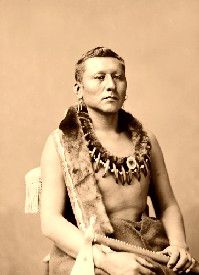
Osage Chief Black Dog
Long before the area was called home by white settlers, the site of what would become Coffeyville was occupied by the Black Dog band of Osage Indians who roamed this part of Kansas and northern Oklahoma, hunting buffalo.
At an early period in Montgomery County history, several attempts were made to establish a town in the southeastern part of the county, nearly all of which failed. The first attempt was made in 1869, when a town called Clymore, named in honor of an Indian chief by that name, sprang into existence but was primarily composed only of Lushbaugh’s trading store. I. C. Crawford and Eli Dennis, in the spring of 1869, laid out a town a mile or so south of Clymore, which they christened Westralia.
These places, however, would soon give way under the absorbing influence of a town founded by Colonel James A. Coffey and N. B. Blanton in 1869. Colonel Coffee originally established a thriving trading post at the site, exchanging supplies with the Osage and Cherokee Indians. Situated on what is now South Walnut Street, a small settlement grew up around the trading post on the west bank of the Verdigris River but grew very slowly during its first few years.
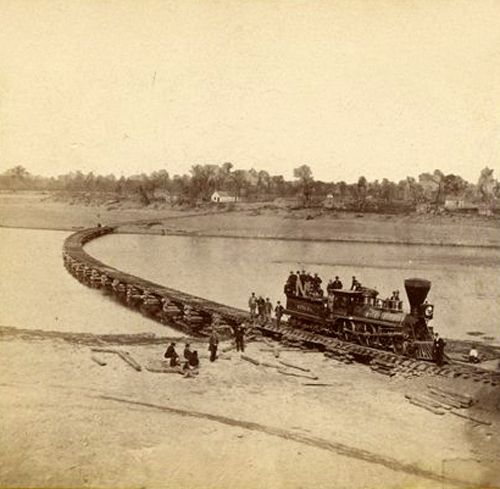
Leavenworth, Lawrence & Galveston Railroad
About a mile and a half south of Westralia, on the east side of the Verdigris River, another settlement called Parker was started about the same time by D.T. Parker, H. W. Martin, and others. The town was designed to be the southern terminus of the Leavenworth, Lawrence & Galveston Railroad. Parker grew quickly, within a year supporting more than 1,000 inhabitants. However, the railroad decided to cross the Verdigris River a few miles above Parker, and the flourishing settlement was doomed. In the meantime, Coffeyville, which had not flourished, was chosen as the railroad’s terminus and guaranteed its success. Within no time, buildings and homes were moved from Parker to Coffeyville, leaving the former town abandoned. After structures were moved and others dismantled for supplies, only two or three buildings remained in Parker. What little was left was washed away by a flood of the Verdigris River soon afterward.
The first townsite of Coffeyville was established about a mile south of the center of the present-day city, just about 1.5 miles from the north line of the Indian Territory. Situated so close to the border of Indian Territory (Oklahoma) and on the cattle trail, much disorder prevailed in the small settlement, so much so that the main thoroughfare took the name “Red Hot Street,” and crime and murder were common occurrences. Despite its wild manner, the first school was conducted in 1869 in Colonel Coffey’s house and taught by his daughter, Mary. That same year, the Methodist Church began in a building at Tenth and Elm Street, which is the church’s present site. The first public tax-supported school began in 1870 in a building on Walnut.
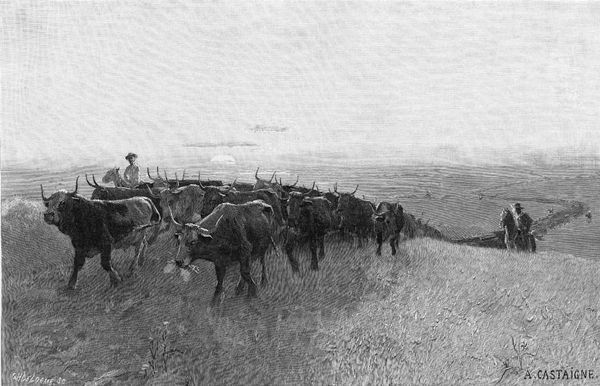
Cattle Trail
When the terminus of the Kansas City, Lawrence & Southern Kansas Railroad was established in 1871, most of the businesses of the original settlement moved a mile north, and the former townsite then took on the nickname of “old town.” A post office was first established at “Old” Coffeyville in September 1871, with Colonel Coffey as its first postmaster. However, in the spring of 1872, it was moved to the new townsite, and S.B. Hickman became the postmaster.
The new townsite of Coffeyville then became the terminus of the southern cattle drive, to which immense herds of cattle were driven from Indian Territory and Texas for shipment by rail to Eastern markets. This stimulated the city’s businesses and earned the status of yet another lawless Kansas cow town. With the large numbers and character of its fluctuating population, the town was wild with excitement, and society was in chaos. The reckless cowboy knew no restraint, gamblers plied their avocation openly, and saloons were quick to ply their customers with liquor.
The streets resounded with the rattle of beer glasses and the clicking of the keno and billiard rooms; quarrels were frequent, and the reports of the pistol, announcing that some unfortunate man had fallen victim to the well-aimed instrument, were common; dance halls, filled with lewd women lined the streets.
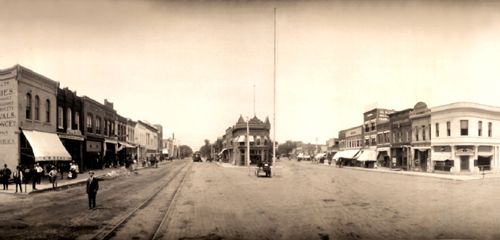
Coffeeville, Kansas 1909
Gambling became so common and of such a nature as to become a nuisance, so much so that Coffeyville Mayor A. B. Clark instructed the police officers to invade the gambling dens and arrest the offenders. However, when the offenders were taken before the judge, he was surprised to find the majority of the city council before him.
Because of the cattle drives, the town grew quickly, but many law-abiding and peace-loving settlers avoided the lawless cow town. However, that changed as the railroad terminus moved further west, and the reckless cowboys found a new cow town to haunt.
Soon, society became organized and settled, and law-abiding citizens moved to the city, which soon supported about 1,500 residents. In February 1872, the town was organized and incorporated.
The Coffeyville Journal was established in October 1875, and the St. Paul’s Episcopal Church was completed in the spring of 1879. Before long, other congregations, including those for African Americans, also were organized. The first bank called the First National Bank, was established in May 1880 by T. G. Ayres and Samuel Steel.
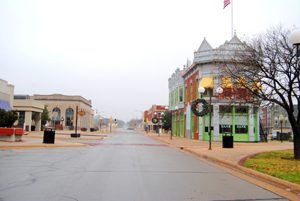
Coffeyville, Kansas Street, today by Kathy Alexander.
Oil was first discovered in 1881 by a man digging a water well on West Ninth Street. Around the same time, farmers reported an oily substance oozing from the ground. By 1882, school enrollment was 428. In 1884, a board of trade was organized in the city.
In 1888, an incident occurred in Coffeyville that startled the whole state and led to an investigation by state officials. A package directed to Winfield was left at the express office on October 18th. While still in the custody of the express agent, it exploded and killed Mrs. Upham and her daughter, Mabel. It was a package of dynamite, and a political murder was intended by the party who prepared it.
By 1889, the city supported several manufacturing establishments, including a cheese factory, two sawmills, a flour mill, a fanning mill, and two corn mills. The following year, Luther Perkins erected a new building in Coffeyville with a design that conveyed the permanence and elegance a proper town should display. When completed, it housed professional offices and his new C. M. Condon and Co. Bank. By that time, the legendary outlaws of the 1870s and 1880s were mostly dead, in prison, or keeping a low profile and a bank robbery was the farthest thing from his mind. That, however, would soon change.
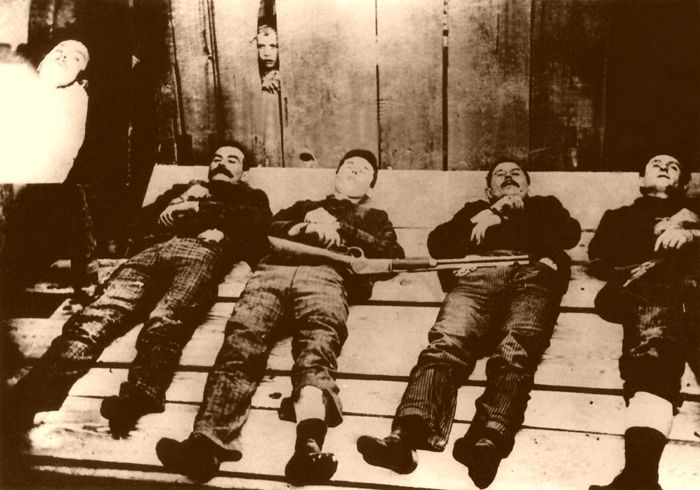
Most of the members of the Dalton Gang were killed after trying to rob two banks in Coffeyville, Kansas.
In October 1892, the most famous event in Coffeyville’s history occurred when the Dalton Brothers and their accomplices attempted to rob two banks. Early on the morning of October 5th, brothers Bob, Grat, and Emmett Dalton, along with Bill Power and Dick Broadwell, set out towards Coffeyville, Kansas. They arrived shortly after 9:00 a.m. to find the city’s streets filled with people. Tying their horses in an alley across from the banks, they dismounted and marched down the alley, three in front and two in the rear. The outlaws, disguised with false beards, divided into two groups: Grat, Power, and Broadwell entered the C.M. Condon & Co. Bank, and Bob and Emmett crossed the plaza to enter the First National Bank. However, the citizens of Coffeyville, aware that the crimes were occurring, attacked the outlaws while robbing the Condon & Co. Bank. Grat, Broadwell, and Power charged out of the bank into the plaza. All three were hit as they ran towards the alley. Bob and Emmett, who had secured $20,000 from the First National Bank, ran around a block, pausing long enough to kill two citizens, and entered the alley about the same time Grat and the others got there. In the alley, the outlaws were fired upon by the citizens, and a battle began, which lasted 12 minutes. When it was over, Bill Power, Bob Dalton, Grat Dalton, and Dick Broadwell were dead, and 21-year-old Emmett Dalton was seriously wounded. Out of the ten citizens who took part, four were killed and two wounded. Emmett was sentenced to life in prison at the Kansas State Penitentiary at Lansing, but after 14 years, he was released.
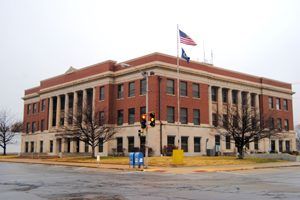
Coffeyville, Kansas Municipal Building.
By the turn of the century, Coffeyville had become the largest city in Montgomery County and one of the most important towns in southeastern Kansas. By that time, four railroads converged in the city — the Atchison, Topeka & Santa Fe; the Missouri, Kansas & Texas Railway; the Missouri Pacific, and the St. Louis and San Francisco Railroad. By that time, the town boasted a population of about 5,000. At about the same time, progressive businessmen of Coffeyville were recognizing the possibilities of the large deposits of clay, sand, and shale in the area and the potential of natural gas as a fuel.
Over the next few years, Coffeyville rapidly expanded into an industrial city and, by 1910, supported nine glass factories, six brick and tile plants, an oil refinery, four foundries, a plow factory, two box factories, two planing mills, a carriage and wagon factory, paper factory, zinc smelter, pottery works, and other manufacturing facilities. Its population flourished, supporting some 12,687 residents and numerous public improvements to support them, including a sewer system, waterworks, fire department, police department, nine public school buildings, a street trolley, and electric lights. Other businesses also included five banks, four theaters, a hospital, three daily and three weekly newspapers, four flour mills, numerous grain elevators, two ice plants, a packing house, and all lines of various retail trade.
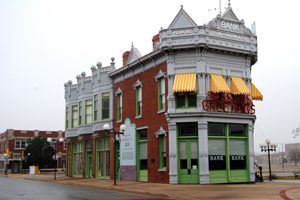
The Condon Bank building still stands in Coffeyville, Kansas, by Kathy Alexander.
The city continued to grow, and by 1915, its population peaked at about 18,500. However, by the very next year, the glass factories had closed their doors. However, Coffeyville’s strong industrial base continued to support the thriving community, which moved into the future over the next century. By 1940, the town continued to support some 17,355 people, and in 1960, 17,382.
Since that time, however, it has gradually declined. Because Coffeyville’s primary economy has never been based on agriculture, though it is significant, its reliance on industry and manufacturing allowed it to thrive, unlike many other small Kansas towns. Today, the town supports more than 10,000 residents. It continues to support a strong industrial base, including John Deere Coffeyville Works, the Acme Foundry, CVR Energy (formerly Farmland Industries), the Rea Patterson Flour Mill, Sherwin Williams, and in 1999, became the home of one of Amazon.com’s largest fulfillment centers.
Coffeyville’s history is preserved at the Dalton Defender’s Museum at 113 East Eighth Street. The museum houses not only memorabilia and photographs from the infamous Dalton Raid in 1892, but it also features many items from the early days of Coffeyville. At Dalton Defenders Plaza and Death Alley, visitors can walk the same path the Daltons took in 1892 as they attempted to rob two banks simultaneously. Markers show the locations where four Coffeyville citizens were killed, and the old jail in Death Alley displays replicas of the Daltons as they were laid out following their deaths. Bullet holes from the gun battle still appear on the north brick wall in Death Alley.
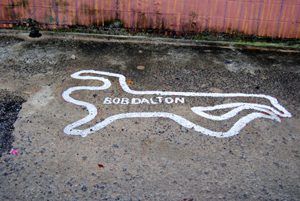
Bob Dalton shot here, Death Alley, Coffeyville, Kansas by Kathy Alexander.
The Perkins Building, the site of the Condon & Co. Bank held up in the Dalton Raid, continues to stand and is open to the public on weekdays. Unfortunately, the First National Bank building no longer stands, but its doors can still be seen at the Dalton Defender’s Museum. Located throughout Coffeyville are murals depicting the city’s history. Three Dalton Gang members, namely Bob and Grat Dalton and Bill Power, are buried at the Elmwood Cemetery just off Eldridge on South Walnut (Highway 169.) For years, their graves were marked with only a metal pipe, which was the hitching post to which they tied their horses on the day they died. However, years later, Emmett Dalton provided a proper headstone. The graves of two of Coffeyville’s defenders — Charles Brown and George Cubine are also buried here. The grave of another Dalton Brother — Frank Dalton, who was killed in 1887 in the line of duty as a U.S. Deputy Marshal, is also buried in the cemetery.
The Brown Mansion, located on South Walnut and built in 1907, takes visitors back to the elegant lifestyle lived in the early 20th century by W.P. Brown. The 16-room Mansion contains the original furniture, wall and floor coverings, a Tiffany Chandelier, five bedrooms, three full baths, a ballroom, and more. The mansion is open sporadically or can be scheduled for tours, as well as private parties, weddings, or other special events.
The Aviation Heritage Museum, dedicated to early aviation and pioneer pilots of the area, features memorabilia from the Coffeyville Air Base, airplanes, and other displays. Situated in a 1930’s era hangar, it is located in Pfister Park and is open on weekends or by appointment.
More Information:
Coffeyville, Kansas Official Website
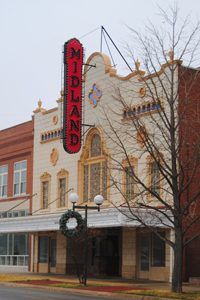
Midland Theatre, Coffeyville, Kansas, by Kathy Alexander.
©Kathy Alexander/Legends of America, updated November 2023.
Also See:
Coffeyville Raid Newspaper Accounts
The Dalton Brothers – Lawmen & Outlaws
Sources:
Blackmar, William; Kansas: A Cyclopedia of State History, Standard Publishing Co., Chicago, IL,1912.
Cutler, William; History of the State of Kansas, A.T. Andreas, Chicago, IL, 1883.
The Deadly Dalton Gang